

Scorpion Control in Topanga, CA: Why November Firewood and Cooler Canyon Nights Bring Scorpions Indoors
Scorpion Control in Topanga, CA: Why November Firewood and Cooler Canyon Nights Bring Scorpions Indoors
It’s a chilly November evening, the fireplace is calling, and you grab a split log from the stack beside the porch. Something small and tan drops onto the deck and slips under the doormat. For many canyon homeowners, that is the moment it sinks in: scorpions share these hillsides with us. If you want clear, practical guidance on scorpion control in Topanga, this guide is for you.
Here at Bugs A to Z, we hear from homeowners across Los Angeles and Ventura County every fall, and the calls follow a familiar pattern. Firewood gets delivered, the first rains soak the hillsides, and residents start finding scorpions in garages, bathtubs and along baseboards. One myth needs clearing up first. The scorpions in our local canyons are not bark scorpions, and the “striped bark scorpion” you may have read about online isn’t a California species. The scorpions you’re likely to meet here have a painful sting, but they are generally far less concerning.
Below, we’ll cover what makes the canyon such good scorpion habitat and what really changes in fall. We’ll also go through the hiding spots worth checking, the prey that draws scorpions toward your walls, how to seal your home and what a professional scorpion inspection looks like. Think of it as a fall scorpion prevention checklist for canyon living.
Why Topanga’s Canyon Terrain Is Prime Scorpion Habitat
Topanga Canyon sits in the heart of the Santa Monica Mountains, and much of what makes it beautiful also makes it ideal for scorpions. Chaparral-covered slopes, oak and sycamore woodland along the creek, sandstone outcrops and decades-old rock walls all offer the cool, sheltered crevices scorpions need during the day. At night, they come out to hunt the insects that thrive in the same habitat. Scorpions in canyon homes near chaparral are simply part of living close to wild land.
Which Scorpions Live in the Santa Monica Mountains?
Santa Monica Mountains scorpions are a fairly modest group. Based on regional references, these are the species people encounter most often:
- California common scorpion (Paruroctonus silvestrii): small and tan to yellowish, sometimes with darker stripes. This is probably what many neighbors mean when they describe a “striped” scorpion.
- California forest scorpion (Uroctonus mordax): dark brown to nearly black. It lives in leaf litter and under logs in shaded canyon bottoms.
- Burrowing scorpions (Anuroctonus species): stout scorpions that dig burrows in compacted soil on slopes and along trails.
What About Bark Scorpions?
The bark scorpion is the one scorpion in the country considered medically significant. In California, its range is generally described as limited to the far southeastern desert. According to the University of California’s Statewide IPM Program, most scorpions found in the state have a sting comparable to a bee or wasp sting. That still hurts, and anyone with a known allergy to insect stings should take it seriously. But it is a very different picture from what you may read about desert regions.
How Cooler November Nights and First Rains Push Scorpions Indoors
We want to be straightforward here, because a lot of online advice gets this wrong. Scorpions are most active in the warm months. As nights cool into the 40s and 50s, they generally slow down and look for a sheltered spot to wait out the cold. There isn’t strong published evidence that November weather triggers a mass migration indoors. So why are scorpions coming into your house in November?
Shelter-Seeking, Not Migration
When temperatures drop, a scorpion looks for a stable, protected spot. A gap under a garage door, a crawl space vent with torn screening or a pile of boxes against a wall can all fit the bill. A scorpion that wanders in while looking for shelter may simply stay put. That is why fall sightings often happen in garages, closets, storage rooms and bathrooms.
What the First Rains Change
The timing of the season’s first real rain varies a lot from year to year. When it arrives, it can flood shallow burrows and soak the leaf litter scorpions hide under. That can push them out of the ground for a while and send them looking for drier cover, sometimes right along your foundation. Are scorpions active in fall in Southern California? They are less active overall, but for a few weeks they are more likely to turn up in unexpected places. The other big fall factor is firewood, which brings us to hiding spots.
Firewood Stacks, Rock Walls and Leaf Litter: Fall Hiding Spots to Check
A quick daytime walk around your property, with gloves and a flashlight, can reveal a lot. These are the spots we check first on canyon properties.
Firewood Stacks
Firewood is probably the most common way scorpions get carried indoors in fall. A stack that sat on bare ground all summer is a ready-made scorpion hotel, and a log brought in for the fire can carry a hitchhiker. To keep scorpions out of firewood stacks:
- Store wood on a raised rack, off the ground.
- Keep stacks well away from the house. In high fire hazard areas, LA County Fire and Cal Fire defensible-space guidance generally calls for firewood to sit at least 30 feet from structures. Check the current rules for your parcel.
- Bring in only what you’ll burn that day, and tap each log on the ground outdoors first.
- Wear gloves when handling wood, especially pieces from the bottom of the stack.
Rock Walls, Leaf Litter and Debris
Dry-stacked rock walls, landscaping boulders, stepping stones, leaf litter under oaks, mulch beds and stored lumber all give scorpions cover during the day. Pay special attention to anything touching the foundation. A few changes can noticeably reduce the number of scorpions living right next to your walls:
- Rake leaf litter back a few feet from the house.
- Move stored materials onto shelving.
- Clear away unused pots and debris.
Do the same in the garage, where cardboard boxes on the floor are a favorite fall hideout.
Crickets, Spiders and Other Prey That Lure Scorpions Into Your Home
Scorpions go where the food is. They eat mostly crickets, spiders, silverfish, cockroaches and other small insects, so a home with lots of insect activity around the foundation draws them in. In fall, crickets are often the biggest draw. They move toward warmth and light and gather around foundations, garages and patios, and scorpions follow.
Cutting back the prey population is one of the most effective parts of fall scorpion prevention:
- Switch exterior lights to yellow “bug” bulbs or motion-activated fixtures, which attract fewer night-flying insects.
- Fix leaky spigots and irrigation that keep soil damp near the foundation.
- If you hear chirping in the garage or see crickets indoors, deal with them early through professional cricket control.
- Knock down webs and reduce spider numbers with targeted spider control, especially in garages, eaves and crawl spaces.
When fewer insects gather around your home, scorpions have less reason to linger there and fewer reasons to follow them inside.
Sealing Your Canyon Home: Doors, Weep Screeds, Vents and Foundation Gaps
Exclusion is the heart of scorpion control. Scorpions can flatten themselves to squeeze through remarkably small openings, so sealing gaps matters more than any spray. Many canyon homes are older, with crawl spaces, settled foundations and stucco walls that offer plenty of ways in.
Doors and Windows
- Install door sweeps on exterior doors, including the door from the garage into the house.
- Replace worn weatherstripping until you can’t see daylight around closed doors.
- Repair torn window and door screens.
Weep Screeds and Vents
The weep screed is the metal strip at the base of a stucco wall that lets moisture drain out. The gap behind it can lead straight into the wall cavity. If you’re wondering how to scorpion-proof weep screeds, block the opening without trapping moisture. Fine stainless or galvanized mesh, or a breathable sealing product made for screeds, works better than solid caulk. Crawl space and foundation vents also need intact, fine-mesh screening.
Foundation and Utility Gaps
Seal foundation cracks with a quality caulk or sealant. Do the same around pipes, cables, A/C lines and hose bibs. Check where siding meets the foundation and where decks attach to the house. Inside, caulk along baseboards and under sinks to limit movement from the wall cavities into living spaces.
Professional Scorpion Control in Topanga: What an Inspection and Treatment Involves
When scorpions keep turning up despite your best efforts, a professional scorpion inspection can pinpoint where they’re living and how they’re getting in. Here at Bugs A to Z, we approach scorpions through integrated pest management. That means combining inspection, exclusion, habitat changes and targeted treatment rather than relying on chemicals alone.
The Inspection
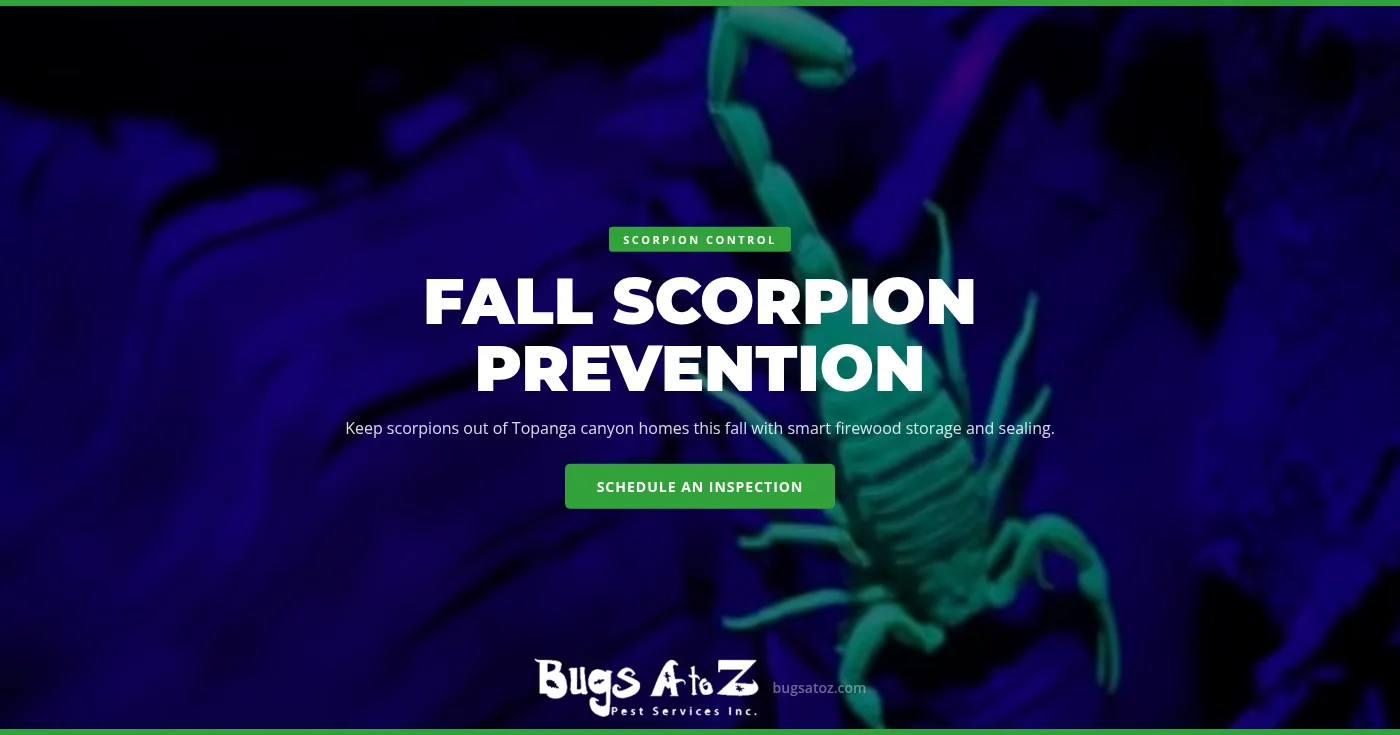
Scorpions glow under ultraviolet light, so part of a thorough inspection often happens after dark with a UV flashlight. We look along foundations, rock walls, woodpiles and landscaping. We also check common entry points such as weep screeds, vents, garage doors and utility openings, and we note the insect activity that is feeding the scorpions.
Treatment and Follow-Up
Perimeter insecticide treatments can help, but they only partly work on scorpions. That is why we pair any treatment with exclusion and habitat recommendations. A typical plan may include:
- Sealing or screening the most important entry points
- Targeted treatment of hiding spots and of the insects that attract scorpions
- Sticky monitoring traps in garages, closets and crawl spaces to track activity
- Follow-up visits to confirm activity is dropping
Every property is different, so we tailor the plan to your home, your terrain and the people and pets who live there.
Frequently Asked Questions About Scorpion Control in Topanga
Are scorpions in Topanga homes dangerous?
For most people, a sting from the local species is painful, similar to a bee sting, but generally not dangerous. Keep a close eye on young children, older adults and anyone with a history of allergic reactions. If you’re stung, wash the area and apply a cold compress. For guidance on symptoms, contact the California Poison Control System or a medical professional.
Do bark scorpions live in Los Angeles County?
Based on available references, no. In California, bark scorpions are generally limited to the far southeastern desert. Scorpions reported around the Los Angeles area are typically native species such as the California common scorpion or the forest scorpion.
Can scorpions really come in on firewood?
Yes. Logs stored on the ground are prime hiding spots. Store wood on a rack away from the house, check each piece outdoors and bring in only what you’ll burn right away.
Do I need a scorpion exterminator in Topanga, CA, or can I handle it myself?
You can often manage occasional sightings with the sealing and cleanup steps above. Professional help makes sense in a few situations:
- You find scorpions indoors regularly.
- You see them in bedrooms.
- You notice heavy cricket or spider activity around the house.
A professional inspection can find entry points and hiding spots that are easy to miss.
Seal Out Scorpions Before Winter Settles In
Cooler nights, the first rains and a fresh stack of firewood don’t have to mean surprise visitors in your bathroom. Store wood properly, clear debris from the foundation, cut back prey insects and seal doors, weep screeds and vents. Together, those steps can greatly reduce the number of scorpions finding their way inside.
Here at Bugs A to Z, we provide scorpion control in Topanga and throughout Los Angeles and Ventura County. We know the canyon terrain, older foundations and fire-season rules that come with life in the hills. Contact Bugs A to Z to schedule a scorpion inspection and get a plan built around your home.
Can Bugs A to Z Help Keep Scorpions Out of My Canyon Home This Fall?
Yes, and we’d be glad to. Scorpions are one of the most common fall concerns we hear about from hillside and canyon homeowners. We handle them as part of our residential pest control services across Los Angeles and Ventura County. Our goal is simple: find out where scorpions are living, close the doors they’re using and make your property less inviting to them.
When we visit, we focus on the details that matter most for scorpions:
- Nighttime UV inspections to spot scorpions along foundations, rock walls and woodpiles
- Entry-point checks at door sweeps, weep screeds, vents, garage doors and utility gaps
- Prey reduction that targets the crickets, spiders and other insects scorpions feed on
- Habitat recommendations for firewood storage, leaf litter and debris near the house
- Monitoring and follow-up with sticky traps and return visits to confirm activity is dropping
We follow an integrated pest management approach. That means exclusion and habitat changes come first, and any treatment is targeted and thoughtfully applied with your family and pets in mind. Every canyon property is different, so we build each plan around your home’s construction, slope and surroundings.
If you’ve been finding scorpions in the garage, bathroom or along baseboards, don’t wait for the problem to settle in for the winter. Reach out to our team to schedule a scorpion inspection. We’ll help you enjoy fireplace season with real peace of mind.